Autism Handprint: A Typeface for Awareness and Advocacy
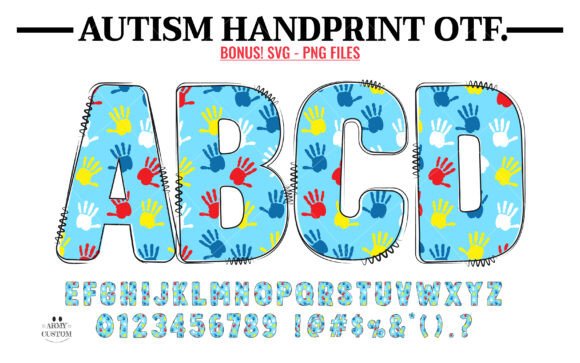
In the world of creative font design, few projects carry as much emotional weight and visual impact as a typeface built for a cause. Autism Handprint is exactly that—a vibrant display font where each bold letterform is filled with a mosaic of colorful handprints. It's more than just a set of characters; it's a visual statement of unity, love, and acceptance. For designers, marketers, and content creators working on advocacy campaigns, educational materials, or community projects, this premium font offers a unique way to communicate a powerful message with warmth and authenticity.
The Visual Heartbeat: More Than Just Letters
At first glance, Autism Handprint is unmistakably bold and joyful. Its strength lies in its texture. Unlike a standard sans serif font or a clean serif font, this typeface uses the negative space within each letter to showcase a pattern of overlapping handprints in a spectrum of colors. This gives it a tactile, human quality that digital type often lacks. The personality is one of community and participation—each handprint suggests an individual, coming together to form a coherent, readable whole. It’s a handwritten font in spirit, but with a structured, intentional design that ensures clarity even at larger scales.
The overall appeal is immediate and emotional. It doesn’t whisper; it speaks clearly about collaboration and support. This makes it particularly effective for projects where the goal is to evoke a sense of belonging and collective action. The visual style avoids clinical sterility, instead embracing the beautiful imperfections and diversity represented by the handprints. For a designer, it’s a tool that can instantly set a tone of compassion and inclusivity.
Strategic Applications: Where This Font Finds Its Voice
Knowing where a display font like this shines is key to using it effectively. Its bold, graphic nature means it’s not suited for body text in a novel or a dense report. However, for headlines, logos, and focal points, it is incredibly powerful. Think of the projects where you need to capture attention and convey a specific emotional message in an instant.
In logo design for an autism support group, a charity run, or a community center, Autism Handprint can form the core of a memorable brand identity. It communicates the organization's mission visually before a single word of description is read. For packaging design on awareness merchandise like t-shirts, tote bags, or pins, the font does the heavy lifting of advocacy. Its use in editorial design is perfect for the cover of a magazine, the chapter headings of a resource guide, or the title page of an educational workbook. In the digital realm, it translates beautifully to social media graphics—think Facebook event banners, Instagram post headers, or YouTube thumbnails for awareness month campaigns. It’s also a natural fit for classroom decor, poster designs, and any web design element that needs a burst of meaningful color and energy.
Designing with Purpose: Readability, Pairing, and Professional Use
A creative font with this much character requires thoughtful implementation. The primary consideration is readability. Because of its filled interior, Autism Handprint works best at medium to large sizes. At very small sizes, the handprint texture can become muddy and lose definition, hindering legibility. Always test it at the intended scale, whether for a billboard or a social media avatar.
Creating effective font pairing is crucial for a balanced layout. To let Autism Handprint be the star, pair it with a neutral, highly legible companion. A clean sans serif font like Montserrat or Lato for body text provides a calm, professional counterpoint. For a more traditional feel, a classic serif font like Garamond or Lora can add a sense of stability. The goal is contrast in both style and texture—the graphic energy of the display font against the quiet professionalism of the text font.
When evaluating its fit for a project, ask: Does the core message align with unity and awareness? Is the audience likely to respond to a warm, human-centric visual style? The included design assets—bonus SVG and PNG files of the handprint patterns—add significant versatility. You can use these design assets to create complementary graphics, background textures, or icons that tie your entire project together visually, ensuring consistency across all marketing materials.
Finally, always review the commercial licensing. For entrepreneurs and small business owners creating products for sale, understanding the license terms is non-negotiable. A commercial font license for Autism Handprint typically covers use on physical goods and digital products, but it's essential to confirm the specifics for your intended use case. This due diligence is part of professional practice, ensuring your brand identity is built on a solid, legal foundation.
In essence, Autism Handprint is a specialized tool in the modern typography landscape. It’s not a workhorse for every project, but in the right context, it becomes an indispensable asset. It allows you to build brand identity, craft compelling social media graphics, and design impactful editorial layouts that do more than look good—they carry a message of hope and solidarity right in their letterforms. For any project centered on autism awareness, this font offers a direct, heartfelt connection to the cause.